

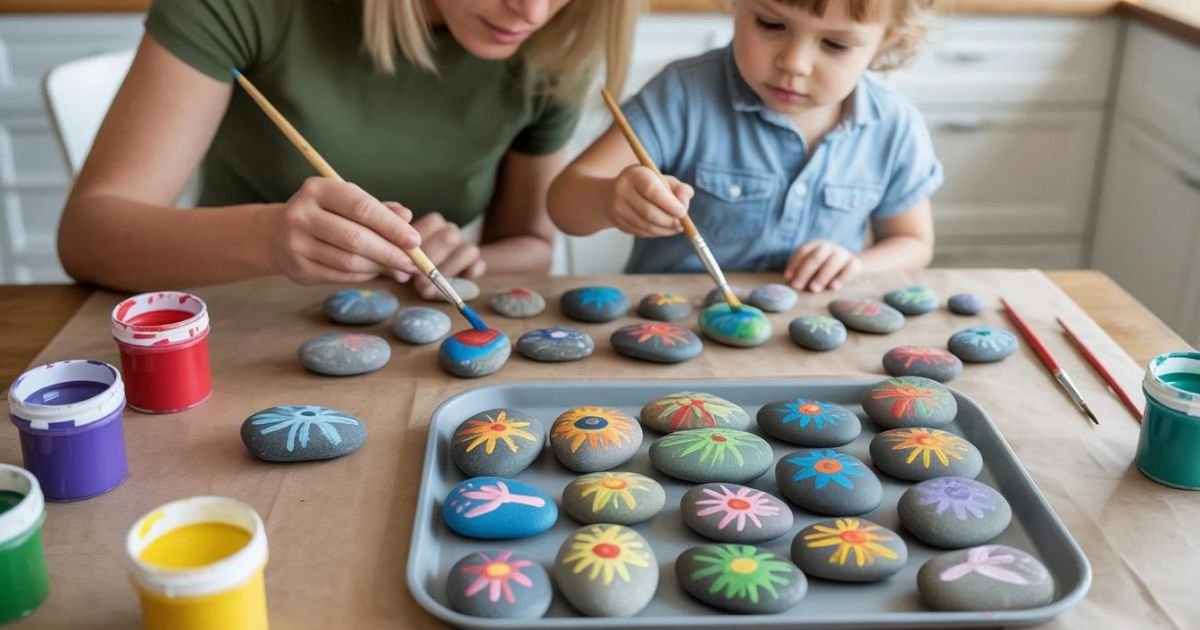
Sometimes, the simplest activities create the happiest family memories. A few smooth stones, some colourful paints and a little time outdoors can turn an ordinary afternoon into something special. Rock painting is an easy, creative activity that children can enjoy while exploring colours, experimenting with designs and spending quality time with their mums.
The best part is that mums do not have to sit on the sidelines. They can pick up a paintbrush, choose their favourite colours and create something alongside their children. From cheerful ladybirds to colourful rainbows, every painted rock becomes a little piece of shared creativity.
Whether you have a garden, a patio or a suitable outdoor space nearby, rock painting offers a lovely way to enjoy nature and make time for each other without planning an expensive family outing.
Why Rock Painting Is a Lovely Activity for Moms and Kids
Children often enjoy activities even more when their parents join in. When a mum paints alongside her child, the experience becomes less about completing a project and more about having fun together.
Rock painting also gives children the freedom to express their ideas. One child might paint a bright yellow sun, while another creates a purple butterfly. There is no single correct design, which makes the activity enjoyable for different ages and abilities.
Here are a few reasons to try it together:
- Creative expression: Children can experiment with colours, shapes and patterns.
- Quality time: Painting gives mums and children an opportunity to talk, laugh and work together.
- Fine motor skills: Holding brushes and adding small details helps children practise hand control.
- Outdoor enjoyment: Families can combine an art activity with fresh air and time in the garden.
- A sense of achievement: Children can proudly display their finished creations or give them as handmade gifts.
The aim is not to create perfect artwork. It is to enjoy the process and let children feel proud of what they make.
What You Need for Outdoor Rock Painting
You do not need a large collection of art supplies to get started. A small box of basic materials is usually enough for a relaxed family painting session.
Before beginning, gather:
- Smooth, clean stones that are large enough to handle comfortably.
- Child-safe, non-toxic paints suitable for the intended surface.
- Paintbrushes in a few different sizes.
- A water container for rinsing brushes, placed where children cannot easily spill it.
- Paper towels or washable cloths.
- An old table covering or reusable craft mat.
- Aprons or clothes that can get messy.
- A tray or cardboard box for drying the finished rocks.
Acrylic craft paint can work well on stones, but check the product label for age suitability and follow its instructions. For younger children, choose washable paints specifically intended for their age group.
If you collect stones outdoors, make sure you have permission to take them. Do not remove stones from protected nature reserves, beaches or other places where collecting is prohibited. Clean, purpose-bought craft stones are another convenient option.
8 Fun Rock Painting Ideas for Children and Their Mums
The most enjoyable designs are often the easiest ones. Choose an idea that suits your child’s age, or let everyone invent something completely different.
1. Colourful Ladybird Rocks
Ladybirds are a classic choice because their shape and colours are easy for children to recognise.
Start with a smooth, rounded stone. Paint it red and allow the first coat to dry. Add a black head, a line down the centre and a few black spots. Older children can add tiny details with a fine brush, while younger children can concentrate on the main colours with help.
Mums can create their own ladybird beside their child’s version. Comparing the different designs afterwards can be just as entertaining as painting them.
2. Rainbow Rocks
Rainbows are ideal for children who love bright colours. Paint curved bands across a flat stone using several shades, allowing the colours to dry as needed.
Younger children do not have to follow a precise pattern. They can create a colourful stone using their favourite shades instead.
For a family twist, everyone can choose a different colour combination. Place the finished stones together to create a cheerful display on a garden table or windowsill.
3. Flower and Daisy Rocks
Flower designs are perfect for a spring or summer afternoon. Paint a coloured circle in the middle of a stone and add simple petals around it. Green leaves and small stems can complete the picture.
Children can choose imaginary flower colours rather than copying real flowers. A blue daisy or a rainbow-coloured flower can be just as lovely as a realistic design.
Mums and children can each paint a flower that reminds them of their favourite season.
4. Funny Faces and Little Characters
Turn ordinary stones into funny faces, friendly monsters or imaginary creatures. Use simple shapes for eyes, mouths, eyebrows and hair.
One rock might have a huge smile, while another could have sleepy eyes or a surprised expression. Children can even invent names and personalities for their characters.
This idea works especially well when everyone contributes to a little collection of painted characters. Once the paint is dry, children can use them to inspire stories or imaginative games under adult supervision.
5. Butterfly and Bee Rocks
Nature provides plenty of inspiration for outdoor art. Butterflies, bees and other familiar garden creatures make colourful subjects for painted stones.
For a butterfly, paint a small body in the centre and add two pairs of wings on either side. Decorate the wings with dots, stripes or contrasting colours. A bee can be made with yellow and black bands.
While painting, mums can talk with children about the insects they might see in the garden and why pollinators are important. It turns a simple art project into an opportunity to notice the natural world around them.
6. Patterned and Polka-Dot Rocks
Not every design needs to represent an animal or flower. Some children prefer abstract patterns, and these are easy to create.
Paint the stone in one base colour, then add dots, lines, little hearts or wavy patterns. A cotton bud or the end of a suitable craft tool may help create dots, provided it is age-appropriate and used safely.
Mums can try a pattern of their own while children experiment with different combinations. The results can look beautiful together, even when every stone is different.
7. Garden-Inspired Nature Rocks
Look around your outdoor space for inspiration. The colours of flowers, the shapes of leaves, the sky and the changing seasons can all influence a painting.
Children might paint a green leaf, a blue sky, a little tree or a simple landscape. They can also invent a magical garden filled with imaginary plants.
Encourage children to observe nature without picking flowers or damaging plants. The idea is to notice details and turn those observations into artwork.
8. Family Memory Rocks
This idea makes the activity especially meaningful. Ask each person to paint something connected to a happy memory, a favourite place or a shared interest.
A child might paint a heart, a mum might choose a flower, and another family member might paint a star. You could also create a matching set using everyone’s favourite colours.
Write the date on a suitable paper label or keep a photograph of the finished collection. Looking back at the pictures later can remind the family of a lovely afternoon spent together.
How to Plan a Relaxed Outdoor Painting Session
You do not need to organise a full-day event. Around 30 to 60 minutes can be enough for a simple painting session, depending on the child’s age, attention span and the drying time of the paint.
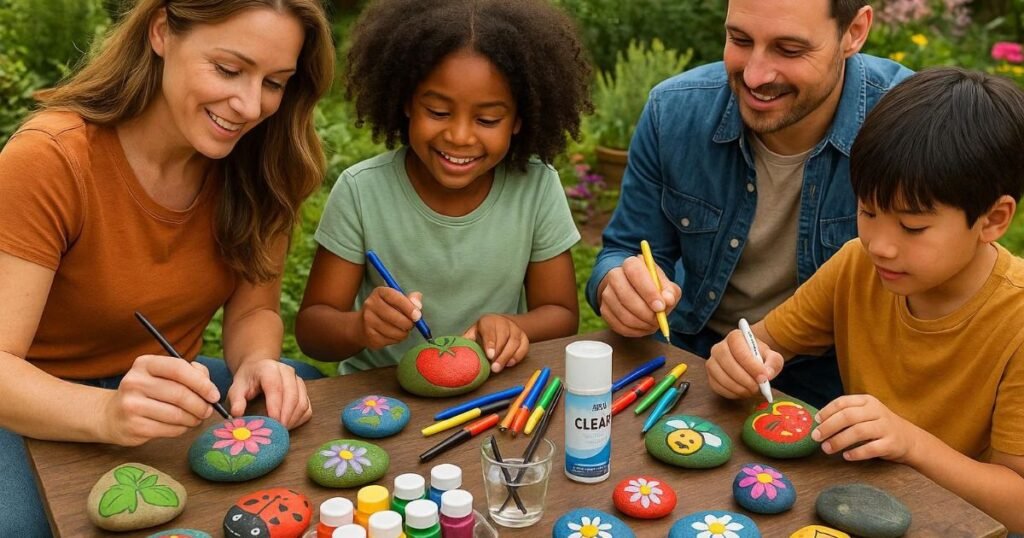
Choose a Comfortable Spot
A garden table, patio or outdoor craft area can work well. Pick a stable surface with enough room for everyone to spread out their materials.
If you do not have a garden, you can use a suitable outdoor space where painting is permitted. Always check local rules before bringing craft materials into a public park or shared area.
Let Children Choose Their Own Designs
Offer a few ideas, but avoid insisting that every child follows a particular example. Some children may want to paint animals, while others prefer a stone covered in colourful dots.
Allowing them to make their own choices can help them feel involved and confident.
Paint Alongside Them
This is where the activity becomes special for mums and children. Instead of supervising from a distance, create your own design and enjoy the process together.
Talk about colour choices, share funny ideas and celebrate small discoveries. If a design looks different from what someone expected, treat it as part of the fun rather than a mistake that needs correcting.
Take Breaks When Needed
Young children may lose interest before their rocks are finished. That is perfectly fine. They can take a break, watch their paint dry or return to the activity later.
Keep the experience relaxed rather than turning it into a task that must be completed.
Display the Finished Artwork
Once the rocks are completely dry, arrange them on a tray, decorate a suitable plant pot or display them on a shelf at home.
If you want to use them outdoors permanently, check whether the paint and any optional sealant are suitable for outdoor exposure. Follow all product instructions and keep coatings away from children until fully dry and safe to handle.
Can You Enjoy Rock Painting Without a Garden?
Absolutely. A private garden is convenient, but it is not essential.
A balcony or patio may provide enough room for a small craft table. Families can also look for organised outdoor art workshops, community craft sessions or family events at local gardens and activity venues.
If you plan to paint in a public place, check whether the venue permits paints and craft activities. Bring a reusable mat, take all materials and rubbish home, and avoid leaving painted stones in natural habitats.
Another option is to collect inspiration during a family walk and complete the painting at home. Children can photograph flowers, leaves and interesting colours, then use those observations to develop their designs.
This combines outdoor exploration with a creative activity without needing to paint directly in a park or nature reserve.
Simple Safety Tips for Painting Rocks With Children
Rock painting is straightforward, but a little preparation makes the activity more comfortable and safer.
- Choose suitable stones: Use clean, smooth stones without sharp edges. Avoid very small stones with young children because they can present a choking hazard.
- Supervise younger children: Keep stones, paint and craft materials away from mouths and eyes. Follow the age recommendations on every product.
- Use appropriate paints: Select non-toxic products designed for children’s use and follow the manufacturer’s instructions.
- Protect the work area: Cover the table and keep water containers stable to reduce spills.
- Wash hands afterwards: Encourage children to wash their hands after the activity and clean brushes as directed.
- Be careful with outdoor temperatures: Choose a comfortable, shaded spot on warm days and bring children indoors if the weather becomes unsuitable.
If you intend to display painted stones outdoors, avoid placing them where they could be mistaken for natural objects or disturb wildlife. Keep the finished artwork in your own garden or another permitted location rather than leaving it in protected natural areas.
Make Rock Painting a Family Tradition
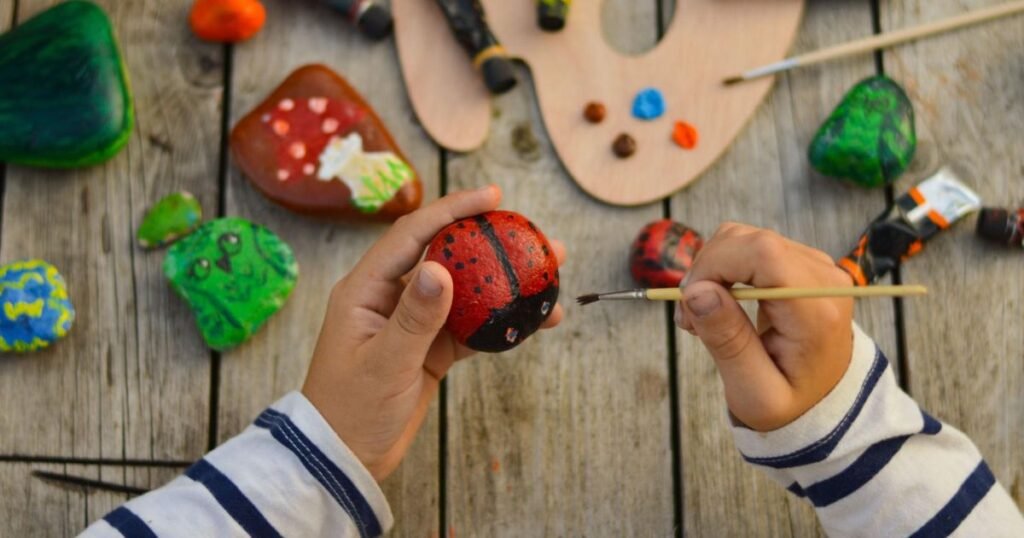
One painting session can easily become a favourite family activity. You might organise a little painting afternoon during the school holidays, create seasonal designs or make a new collection whenever the weather is pleasant.
For example, spring could inspire flowers and butterflies, summer could bring rainbows and beach-inspired patterns, and autumn could encourage colourful leaves and woodland creatures. Children can choose the themes and help prepare the materials.
You could also keep a small box of finished rocks at home and add new creations over time. Each one can represent a different afternoon, a new idea or a special moment spent together.
The goal is not to produce a perfect collection. It is to create opportunities for children and parents to slow down, share ideas and enjoy doing something together.
Final Thoughts
Rock painting is a simple way for mums and children to enjoy creativity outdoors without needing expensive supplies or complicated plans. A handful of stones and a few suitable paints can inspire colourful designs, imaginative stories and meaningful family moments.
Children get the chance to experiment, express themselves and feel proud of their creations. Mums get to join in, enjoy a creative break and make memories alongside their children.
So, the next time you have a free afternoon, gather a few suitable stones, choose some favourite colours and start painting together. The finished rocks may be small, but the fun you share while making them can become a lovely part of family life.
Frequently Asked Questions
What age can children start rock painting?
Children can explore age-appropriate painting activities from an early age with close adult supervision. For toddlers, use suitable washable paints and large stones that cannot easily fit into their mouths. Always follow product age recommendations.
What paint is best for rock painting with children?
Choose non-toxic, age-appropriate paint that is suitable for the stone surface. Washable children’s paints can be convenient for supervised activities, while some craft paints may offer a more durable finish. Check the label before use.
Can mums enjoy rock painting too?
Yes. Adults can create their own designs, experiment with patterns and share ideas with their children. Painting together makes the activity a shared creative experience rather than something children have to do alone.
Can you do rock painting indoors?
Yes. A kitchen table or craft area works well when the weather is cold or wet. Cover the surface, provide suitable materials and allow painted stones to dry in a safe place.
What can children do with their painted rocks?
Children can display their finished stones in a garden, arrange them in a tray, decorate a suitable plant pot or keep them as handmade keepsakes. Avoid leaving painted rocks in protected natural spaces or places where they could disturb wildlife.

Carter John is a writer at KnowsDaily, covering a wide range of topics, including lifestyle, technology, travel, finance, education, and everyday life. He focuses on creating clear, informative, and engaging content that helps readers find useful answers, explore new ideas, and make informed decisions. Through his work at KnowsDaily, Carter aims to make everyday information accessible, practical, and easy to understand.