

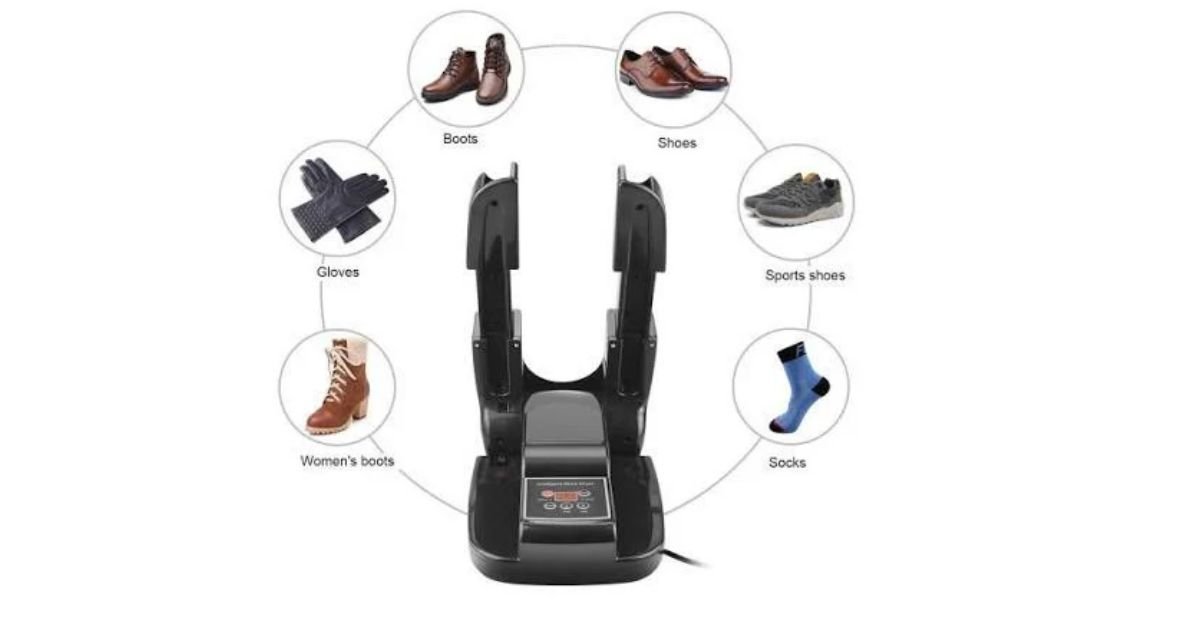
An electric shoe dryer is a practical appliance for removing moisture from damp footwear, especially during the UK’s wet and rainy months. From trainers soaked on the school run to boots worn during outdoor walks, wet shoes can take hours to dry naturally. Wearing them while they are still damp can feel uncomfortable, and placing them too close to a radiator may damage certain materials.
Designed with features such as gentle heating, air circulation and temperature controls, an electric shoe dryer can help speed up the drying process. Different models offer different technologies, making it important to understand how they work, which footwear they suit and what safety features to look for before buying one.
The Technology Behind an Electric Shoe Dryer
An electric shoe dryer uses simple electrical technology to remove moisture from footwear more efficiently than natural air drying alone. Depending on the model, it may use a heating element to produce gentle warmth, a fan to circulate air, or heated drying tubes that direct warm air inside the shoes.
Some models include digital timers, adjustable temperature settings and automatic shut-off features. These controls help users manage the drying process and reduce the risk of overheating. More advanced designs may also offer temperature sensors that regulate heat during operation.
Unlike a traditional radiator or hairdryer, a shoe dryer is designed specifically for footwear. Its shape and airflow system help distribute warmth inside shoes, where moisture often collects around the toes, insoles and lining.
However, not every electric shoe dryer uses the same technology. Basic models may rely on simple heated elements, while other versions combine airflow with temperature controls. Before buying one, check the manufacturer’s specifications to understand which features the particular model offers.
What Is an Electric Shoe Dryer?
An electric shoe dryer is an appliance that helps dry the inside of damp footwear. It typically uses electricity to power a heating element, a fan or another drying mechanism that encourages moisture to evaporate.
Many household models have two drying tubes or supports that fit inside a pair of shoes. Other designs use heated platforms, compact chambers or forced-air systems.
Unlike a washing machine or specialist shoe-cleaning device, a shoe dryer is not primarily intended to remove mud, stains or odours caused by dirt. Its main purpose is to help footwear dry after exposure to rain, sweat or other moisture.
These appliances can be useful for families with school-age children, people who walk regularly, outdoor enthusiasts and anyone who frequently wears shoes in wet conditions.
How Does an Electric Shoe Dryer Work?
The drying process is based on evaporation. When moisture inside a shoe receives enough energy, it gradually changes into water vapour. Moving air can help carry that vapour away, allowing the material to dry more efficiently.
Most household shoe dryers use one of the following approaches.
Warm-Air Drying
Warm-air models use a heating element, sometimes combined with a fan, to circulate heated air around the inside of footwear. The warmth encourages moisture to evaporate, while airflow helps move humid air away.
Some devices direct air through tubes inserted into the shoes. Others circulate air around the footwear in a drying chamber.
The temperature and airflow vary between models.Low temperatures drying can be an option for fragile items; however, one must adhere to the care guidelines from the shoe manufacturer and the dryer operating guidelines.
Fan-Assisted Drying
Some shoe dryers rely mainly on moving air rather than substantial heat. Air circulation helps moisture escape from the interior, although drying time depends on the amount of water, the shoe’s construction and the surrounding conditions.
This approach may be worth considering for footwear that should not be exposed to high temperatures, provided the device is specifically suitable for that material.
Heated Supports
Certain compact dryers use heated elements built into supports that sit inside the footwear. These warm the surrounding area and encourage evaporation.
Because heat distribution differs from one design to another, it is important to check whether the product is suitable for your particular shoes. A dryer that works well with ordinary trainers may not be appropriate for leather, glued soles or specialist footwear.
When Might You Need a Shoe Dryer?
A shoe dryer is not essential for every household, but it can be convenient when footwear becomes damp regularly.
After walking in the rain: Wet pavements, puddles and unexpected showers can leave shoes damp, especially around the toes and inner lining.
For school shoes and trainers: Children may return home with damp footwear after walking to school, playing outside or taking part in sports. A suitable dryer can help prepare shoes for their next use.
For walking and hiking boots: Outdoor activities can expose footwear to rain, wet grass and muddy trails. Drying the interior between outings can make boots more comfortable to wear.
For sports footwear: Trainers can accumulate moisture through perspiration as well as external water. Allowing them to dry thoroughly between uses helps reduce persistent dampness.
For work shoes: People who spend long hours on their feet may find that footwear needs more time to dry between shifts.
A dryer is most useful when moisture is a recurring problem. If your shoes become wet only occasionally, simply allowing them to air-dry in a well-ventilated area may be sufficient.
Which Types of Shoes Can You Dry?
Compatibility depends on both the dryer and the footwear. Always check the manufacturer’s instructions before using an electric appliance.
| Footwear | What to consider |
|---|---|
| Fabric trainers | Often suitable for compatible warm-air or fan-assisted dryers |
| School shoes | Check the upper material, sole construction and temperature guidance |
| Walking boots | Look for a design suitable for the boot’s size and construction |
| Leather shoes | Use only a method approved for leather; excessive heat can cause damage |
| Suede footwear | Avoid unapproved heat and follow the manufacturer’s specialist care advice |
| Waterproof footwear | Check the footwear and dryer instructions, as heat may affect some membranes, adhesives or components |
| Specialist sports shoes | Follow the brand’s care guidance, particularly for glued soles and technical materials |
After cleaning off the loose dirt, you need to allow the shoes to dry, opening up your footwear to the extent that its construction allows. You can remove the detachable insoles and loosen the laces, if the manufacturer allows it.
A shoe dryer is not supposed to be considered suitable for drying any pair of shoes by virtue of its claimed multi-purpose nature.
How much time does an electrical shoe dryer take?
There is no single drying time that applies to every shoe dryer.
Lightly damp trainers may dry relatively quickly, while footwear soaked by heavy rain can take considerably longer. Thick linings, insulated boots and waterproof membranes may slow moisture loss because water cannot escape as easily.
Other factors include the dryer’s power, temperature, airflow, the room’s humidity and whether the shoes were dripping wet when drying began.
Check the manufacturer’s estimated drying times, but treat them as guidance rather than a guarantee. Inspect the shoes before wearing them again, paying attention to the toe area, lining and insoles.
If footwear remains noticeably damp, allow additional drying time instead of increasing the temperature beyond the recommended setting.
What Features Should You Look For?
If you are comparing electric shoe dryers, a few practical features deserve attention.
Temperature Control
Adjustable temperature settings can be useful for households with different types of footwear. Some materials tolerate gentle warmth, while others require air drying or a specific low-temperature method.
Do not assume that a higher temperature means better performance. Excessive heat may deform materials, weaken adhesives or damage finishes.
Timer and Automatic Shut-Off
A timer lets you set a defined operating period. Automatic shut-off can reduce the risk of a device continuing to run longer than intended.
These features are helpful, but they do not replace safe placement, supervision where required or compliance with the manufacturer’s instructions.
Airflow and Design
A tube-style dryer needs to fit comfortably inside the shoe without stretching it. A chamber-style appliance needs enough space for the footwear and sufficient ventilation around the device.
Consider the shoes you wear most often rather than choosing a design based solely on appearance.
Size and Portability
A compact dryer may be convenient for smaller homes or occasional trips. If you want to dry tall boots, check the dimensions and whether the design can accommodate them.
Portability is less important if the appliance will remain in one place, such as a utility room.
Noise and Energy Use
Fan-assisted models may produce some noise. If you plan to run a dryer near a bedroom or living area, look for the manufacturer’s noise information where available.
Energy consumption also varies. A model’s wattage and the length of each drying cycle influence how much electricity it uses.
Electric shoe dryer vs air drying. Which is better?
Both methods can be useful, and the better choice depends on how wet your shoes are and how quickly you need them to dry.
Air drying is simple and requires no electricity. Place footwear in a dry, well-ventilated area away from direct heat, and allow sufficient time for moisture to escape. This is often a suitable approach for delicate shoes that should not be heated.
An electric shoe dryer can help speed up the process when its airflow or controlled warmth is appropriate for the footwear. It may be particularly convenient when shoes are used frequently and need to dry between outings.
But it does not mean that every material will need drying.Direct heat from radiators, hairdryers or other unsuitable sources can damage footwear, and the same caution applies to electric dryers that are not designed for a particular shoe type.
For very wet footwear, remove excess surface water with a suitable cloth, take out removable insoles if permitted and follow the recommended drying method. Never place wet shoes on an appliance or heating surface unless it is specifically designed for that purpose.
Can a Shoe Dryer Help With Odours?
Moisture can contribute to unpleasant shoe odours because warm, damp conditions encourage the growth of odour-producing microorganisms. Drying footwear thoroughly may help reduce one factor that contributes to the problem.
However, a standard electric shoe dryer is not necessarily a deodoriser or disinfecting device. It may not remove odours caused by accumulated sweat, dirt or microbial growth.
For better footwear hygiene, wear clean socks, allow shoes to dry between uses and clean removable insoles according to their care instructions. Wash footwear only when the manufacturer says it is suitable for washing.
Some specialist products advertise ultraviolet light or other odour-control features. These should be evaluated separately from ordinary drying functions. Do not assume that a device sanitises shoes unless its capabilities and appropriate testing support that claim.
How to Use an Electric Shoe Dryer Safely
Correct use protects both the appliance and your footwear.
- Read the instructions first. Check the permitted shoe types, operating temperature and recommended drying time.
- Remove excess water. If the shoes are very wet, gently blot the exterior with a suitable cloth. Do not operate electrical equipment while handling wet plugs or connectors.
- Prepare the footwear. Loosen the laces and remove insoles where appropriate to improve access to damp areas.
- Position the dryer correctly. Insert tubes or supports only as instructed, and keep air openings clear.
- Use the recommended setting. Avoid extending the drying cycle or increasing the temperature beyond the manufacturer’s guidance.
- Keep the appliance in a suitable location. Use it on a stable surface, away from water and other hazards, and follow instructions concerning ventilation and supervision.
- Check the footwear before wearing it. Make sure the lining is dry enough and the material has not become unusually hot or damaged.
Do not use a damaged appliance, operate it with a wet electrical connection or leave it running unattended unless the manufacturer’s instructions expressly permit that mode of operation. Keep the device away from children unless they are using it under appropriate adult supervision.
How Much Electricity Does a Shoe Dryer Use?
The electricity used depends on the appliance’s rated power and how long it operates.
For example, a hypothetical 20-watt dryer running for five hours would use 0.1 kilowatt-hours of electricity. A 200-watt model operating for one hour would use 0.2 kilowatt-hours.
The calculation is:
Energy used in kWh = Power in watts × Operating hours ÷ 1,000
To estimate the cost, multiply the energy used by your electricity tariff per kilowatt-hour. The figures above are examples, not specifications for a particular product.
Actual consumption can differ according to the device’s power draw, whether it cycles on and off, and the length of the drying session. Checking the rating label is the best starting point when comparing models.
Final Thoughts
An electric shoe dryer can be a practical household appliance for people who regularly deal with damp footwear. It works by encouraging moisture to evaporate, usually through airflow, controlled warmth or both.Before choosing one, consider the types of shoes you wear, how wet they typically become and whether they can safely tolerate the dryer’s method of operation.
Temperature controls, timers, suitable dimensions and clear safety instructions can all help you find a model that fits your needs.For occasional dampness, ordinary air drying may be enough. For households dealing with wet school shoes, walking boots or frequently worn trainers, a suitable electric dryer can offer a convenient alternative.The key is to use the right drying method for the material. Proper care can help footwear remain comfortable and in good condition without exposing it to unnecessary heat.
Frequently Asked Questions
Does an electric shoe dryer clean shoes?
No. Its primary purpose is to remove moisture from footwear. Mud, surface dirt and stains should be cleaned using a method appropriate for the shoe material.
Can I leave a shoe dryer on overnight?
Only if the manufacturer explicitly permits the intended operation and provides suitable safety instructions. Follow the product’s guidance on timers, automatic shut-off, supervision and operating conditions.
Can an electric shoe dryer damage shoes?
It can if the temperature is too high or the footwear is not compatible with the drying method. Leather, suede, glued soles and some waterproof materials need particular care.
Can I use a shoe dryer for wet trainers?
Many models are designed for trainers, but suitability depends on their construction and the appliance’s instructions. Check the recommended temperature and drying method before use.
Does a shoe dryer remove bacteria?
Ordinary drying should not be confused with disinfection. Reducing moisture may help limit conditions that contribute to odour, but a standard dryer does not necessarily eliminate bacteria or fungi.
Is an electric shoe dryer worth buying in the UK?
It may be useful if rain, outdoor activities or frequent use leave your shoes damp regularly. If your footwear dries easily in a ventilated room, you may not need a separate appliance.

Carter John is a writer at KnowsDaily, covering a wide range of topics, including lifestyle, technology, travel, finance, education, and everyday life. He focuses on creating clear, informative, and engaging content that helps readers find useful answers, explore new ideas, and make informed decisions. Through his work at KnowsDaily, Carter aims to make everyday information accessible, practical, and easy to understand.