

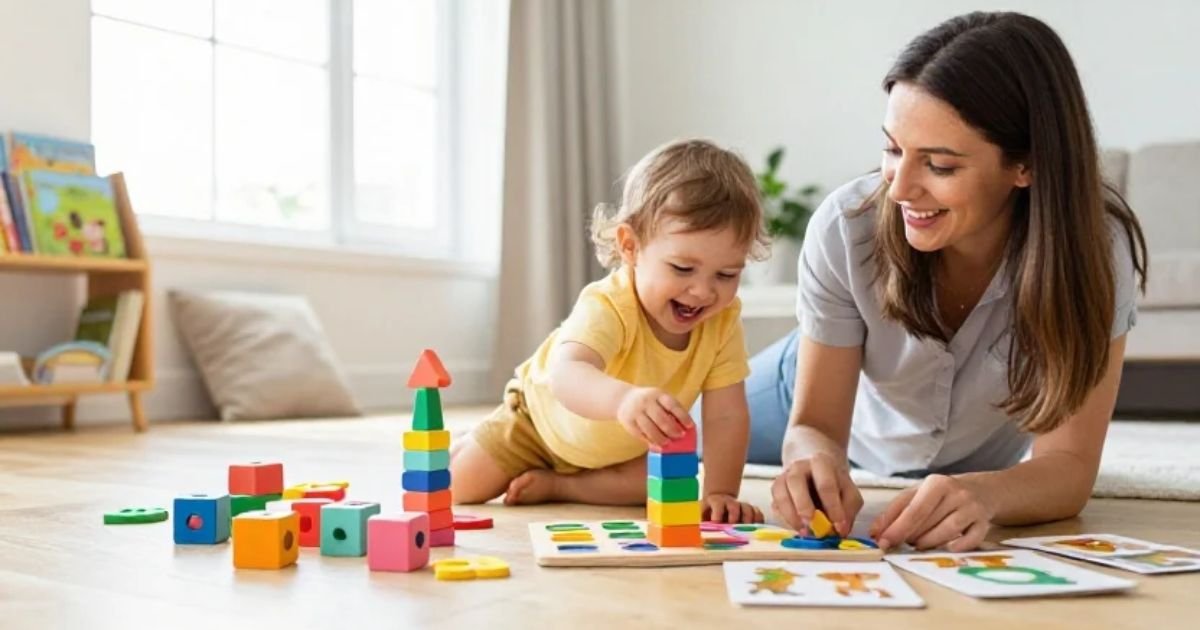
Choosing the right education games for 3 year olds can help make everyday learning enjoyable for young children. At this age, children are naturally curious about colours, numbers, animals, sounds and the world around them. Simple games give them opportunities to explore these interests while spending quality time with a parent or carer.
Learning does not have to involve worksheets, long lessons or expensive toys. Sorting colourful objects, singing counting songs, building towers and looking at picture books can all introduce useful skills. Some online games can also provide extra practice when chosen carefully and used in moderation.
This guide explores fun learning games for three-year-olds, including free activities to try at home, simple indoor games and age-appropriate online resources for UK families.
What Can a 3-Year-Old Learn Through Games?
Three-year-olds develop at different rates, so there is no single set of skills every child must master at this age. The aim is to encourage curiosity, communication and confidence rather than expect children to get every answer right.
In England, the Early Years Foundation Stage (EYFS) framework includes communication and language, physical development, literacy, mathematics, understanding the world, personal and social development, and expressive arts and design. Play is an important part of how young children learn these skills.
Suitable games can introduce children to:
- Numbers and counting: Recognising small quantities and counting toys or everyday objects.
- Colours and shapes: Identifying familiar colours, circles, squares and other simple shapes.
- Early language: Learning new words, describing pictures and listening to stories.
- Memory and matching: Finding pairs, remembering objects and spotting similarities.
- Creative thinking: Drawing, building, singing and pretending.
- Social skills: Taking turns, sharing toys and following simple instructions.
The best activities are those that match a child’s interests and can be adjusted to suit their current abilities.
10 Fun Education Games for 3 Year Olds
You do not need a large collection of toys to create useful learning opportunities. Try these simple activities at home and repeat the ones your child enjoys.
1. Colour-Sorting Game
Colour sorting is an easy way to introduce recognition, comparison and grouping.Gather a few large, safe objects in different colours, such as building blocks, soft toys or coloured cups. Ask your child to put the red objects together, find something blue or match an object to a similarly coloured cup.
Keep the activity relaxed. If your child chooses the wrong colour, name the colour together and let them try again.
Skills practised: Colour recognition, visual attention and sorting.
2. Count the Toys
Turn tidying time into a simple counting game. Place a few toys on the floor and count them together as your child puts each one into a storage box.
Start with two or three objects before adding more. Encourage your child to touch each toy as you say its number, helping them connect number words with real objects.You can use building blocks, toy animals, cars or soft toys.
Skills practised: Early counting, number language and one-to-one correspondence.
3. Shape Hunt Around the Home
A shape hunt encourages children to notice patterns and shapes in familiar surroundings.Ask your child to find a round plate, a square cushion or a rectangular book. You can also introduce simple shape cards and ask them to find objects that look similar.
There is no need to worry about perfect definitions. The goal is to help your child notice how everyday objects differ.
Skills practised: Shape recognition, observation and descriptive language.
4. Alphabet and Sound Games
At three, children can enjoy hearing letter sounds and noticing the first sounds in familiar words without being expected to read independently.Choose a favourite picture book, point to a picture and say its name clearly.
You might ask whether your child can hear the same starting sound in two simple words.Alphabet songs and picture cards can make this activity more engaging. Keep it playful rather than testing your child on every letter.
Skills practised: Listening, vocabulary and early phonological awareness.
5. Animal Sound Matching
Animal games are useful for children who enjoy books, toys and nature.Show your child pictures of familiar animals and invite them to imitate the sounds they make.
You could make a matching game with animal figures and pictures, asking your child to find the matching pair.Extend the activity by describing each animal. For example, talk about where a duck lives or how a rabbit moves.
Skills practised: Memory, listening, vocabulary and imaginative play.
6. Picture Matching Game
Picture matching introduces simple problem-solving without requiring reading skills.Use pairs of picture cards showing familiar objects, such as apples, buses, cats or shoes. Place a few cards face up and invite your child to find two matching pictures.
Begin with only two or three pairs. Increase the number as your child becomes comfortable with the activity.For younger or less confident players, leave all the cards visible. Turning the cards face down can be introduced later if the child enjoys a greater challenge.
Skills practised: Visual memory, concentration and recognising similarities.
7. Build and Count
Building blocks offer opportunities to explore both maths and creativity.Ask your child to build a tower with three blocks, compare a tall tower with a short one or count how many blocks are used. You can also explore concepts such as big and small, more and fewer.
Let your child experiment freely rather than insisting on a particular design. Knocking down a tower and rebuilding it can be part of the fun.
Skills practised: Counting, spatial awareness, problem-solving and fine motor control.
8. Nursery Rhyme and Action Games
Songs with actions combine language, movement and memory. Choose familiar nursery rhymes and encourage your child to clap, tap, jump or copy simple movements.
You can also make up a game in which your child follows instructions such as “clap twice”, “touch your nose” or “stamp your feet”.Keep movements suitable for the space available and supervise your child throughout the activity.
Skills practised: Listening, rhythm, coordination and following instructions.
9. Pretend Shop
A pretend shop is a simple way to introduce everyday maths and communication.Use toy food or pictures of familiar groceries. Take turns being the shopkeeper and customer, asking for an apple, a loaf of bread or two toy bananas.
You can use play money if you have it, but real prices and calculations are unnecessary. Focus on naming items, asking questions and taking turns.
Skills practised: Vocabulary, social interaction, counting and imaginative thinking.
10. Water-Free Sensory Sorting
For an activity involving touch and observation, offer a tray containing large, age-appropriate objects with different textures, colours or shapes.
Ask your child to group objects that feel alike, find something smooth or identify the biggest item. You can also use fabric pieces or large toy shapes.Always choose materials appropriate for your child’s age and supervise closely. Avoid small items that could present a choking risk.
Skills practised: Sensory exploration, comparison, descriptive language and sorting.
Free Online Education Games for 3-Year-Olds
Digital games may offer extra variety, particularly when children enjoy colourful pictures, familiar characters, music and interactive activities. They should complement, rather than replace, hands-on play, conversation, books and physical activity.
Here are some online resources that UK parents can explore.
CBeebies Learn
The CBeebies Learn: Preschool Game app offers games and videos covering early maths, phonics, letters, shapes, colours, communication and other preschool skills. Its listed target age is two to four years, making it a relevant option for many three-year-olds.
Some activities feature familiar CBeebies characters, while the app description states that it is free to play, has no in-app purchases and supports offline play.
Parents can check the current app details and compatibility on Google Play.
Topmarks Early Years Games
Topmarks has an early-years section with interactive activities for children aged three to five. Its games include counting, matching, shapes and sequencing.
For example, the Topmarks ordering and sequencing games include activities with numbers and shape patterns.
An adult may need to help a three-year-old navigate the website and understand the instructions.
Make Your Own Digital Learning Activity
You do not always need to download a new app. A parent can use digital pictures or a simple drawing programme to ask a child to find matching colours, identify familiar animals or point to the biggest object.
Choose activities with clear visuals, simple interactions and minimal distractions. Check advertisements, external links, privacy settings and any in-app purchases before letting your child use an app.
How to Choose the Right Learning Game
Not every activity labelled educational will be suitable for a three-year-old. Choose games based on your child’s interests and abilities rather than how many letters or numbers the game promises to teach.
Look for these features:
- Simple instructions: The activity should be easy to understand with a little adult support.
- Clear visuals: Familiar pictures and uncluttered screens can make activities easier to follow.
- Room to explore: Games should allow children to try, make mistakes and try again.
- Useful learning opportunities: Look for activities involving language, counting, matching, creativity or problem-solving.
- Appropriate safety features: Check the age rating, advertisements, purchases, privacy settings and whether the activity contains external links.
An activity does not need to be labelled educational to be useful. Building with blocks, pretending to cook or talking about pictures can create meaningful learning opportunities when adults join in.
How Much Time Should a 3-Year-Old Spend on Learning Games?
There is no need to fill a three-year-old’s day with structured educational activities. Short games can be enough, particularly when a child is interested and engaged.
For digital activities, the World Health Organization recommends no more than one hour of sedentary screen time per day for children aged three to four, with less being better. This is a general daily recommendation for screen-based sedentary time, not a target that children need to reach.
Try balancing screen activities with outdoor play, movement, story time, drawing, pretend play and conversations. When using an app, sit with your child where possible, talk about what is happening and stop when they lose interest.
If a child does not enjoy a particular game, try a different approach. Learning through play should feel encouraging, not like an examination.
Frequently Asked Questions
What are the best education games for 3 year olds?
Colour sorting, toy counting, shape hunts, picture matching, animal sounds, building blocks and nursery rhyme games are useful starting points. The best choice depends on the child’s interests and abilities.
Are free online learning games suitable for three-year-olds?
Some free online games are designed for preschool children, including CBeebies Learn and selected Topmarks activities. Adults should check age suitability, advertisements, privacy settings and any purchase options before use.
Can a three-year-old learn numbers through games?
Yes. Everyday games can introduce counting and number language. Start with a small number of familiar objects, count them together and gradually add more as your child becomes comfortable.
Should a three-year-old know the whole alphabet?
Children develop at different rates, so knowing every letter should not be treated as a requirement for every three-year-old. Songs, picture books and playful sound activities can introduce letters without pressure.
Are offline games better than educational apps?
Both can be useful for different purposes. Physical games offer opportunities for movement, handling objects and face-to-face interaction, while carefully chosen apps can provide interactive pictures and sounds. A balanced mix is a sensible approach.
How can parents make learning fun at home?
Follow your child’s interests and turn ordinary routines into games. Count steps, sort laundry by colour, name shapes in picture books or pretend to run a shop. Keep activities short, offer encouragement and allow your child to explore.
Final Thoughts
Good learning games help three-year-olds explore ideas through play, conversation and everyday experiences. From counting toys and matching pictures to singing nursery rhymes and trying suitable preschool apps, there are plenty of ways to introduce early learning at home without making it feel like school.
Start with activities your child already enjoys, offer gentle encouragement and change the game when their interest fades. The aim is not to rush development, but to build curiosity, confidence and a positive relationship with learning.

Carter John is a writer at KnowsDaily, covering a wide range of topics, including lifestyle, technology, travel, finance, education, and everyday life. He focuses on creating clear, informative, and engaging content that helps readers find useful answers, explore new ideas, and make informed decisions. Through his work at KnowsDaily, Carter aims to make everyday information accessible, practical, and easy to understand.
1 thought on “Education Games for 3 Year Olds: Fun Ways to Learn Through Play”